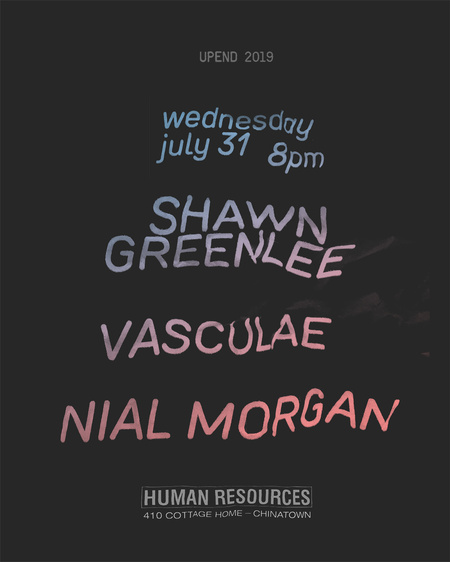
FRIDAY, NOVEMBER 6, 2026
8PM
![]()
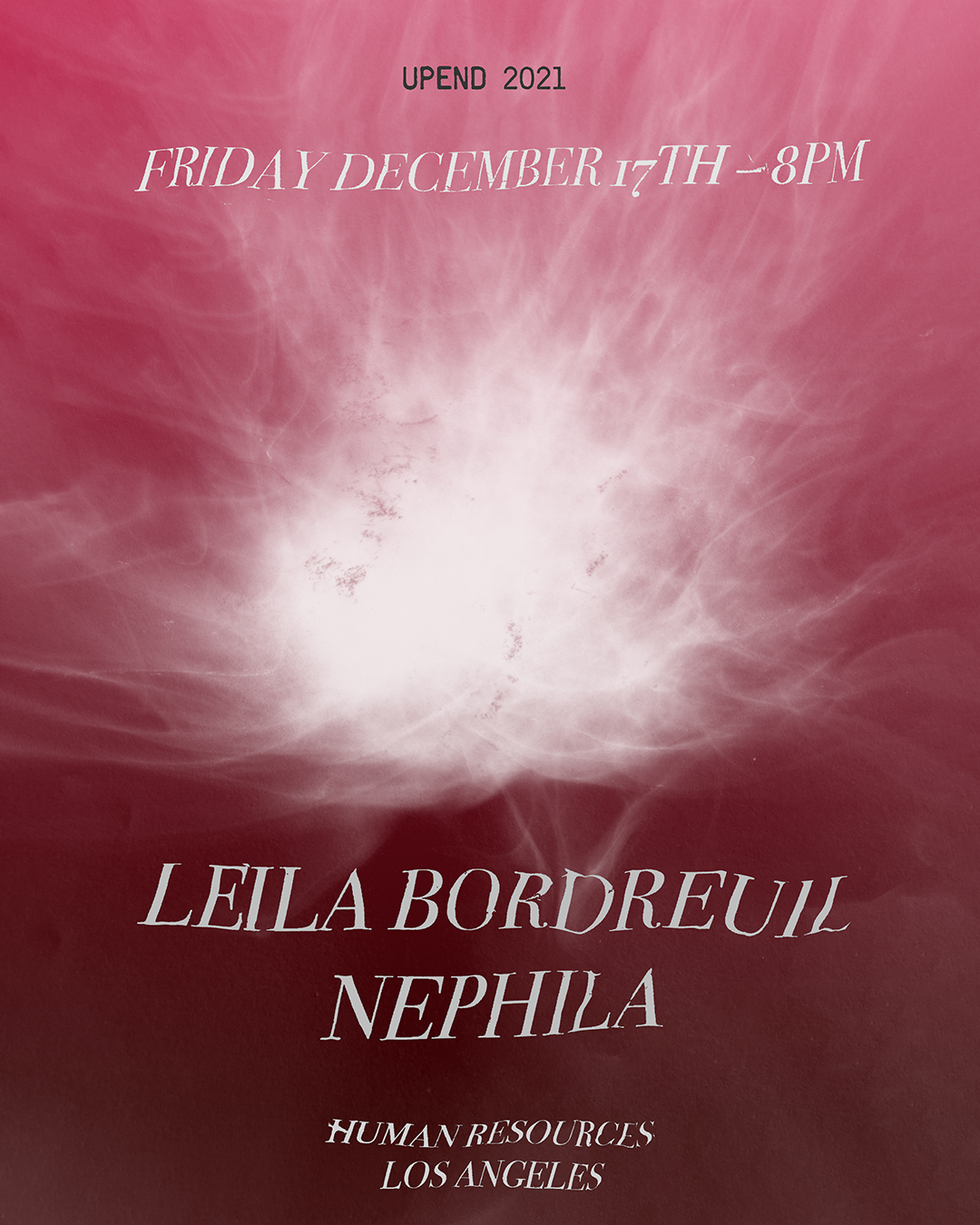
LEILA BORDREUIL
TWIG HARPER
ELIF DINÇER
HUMAN RESOURCES
LOS ANGELES
8PM

LEILA BORDREUIL
TWIG HARPER
ELIF DINÇER
HUMAN RESOURCES
LOS ANGELES
Leila Bordreuil – the astounding Brooklyn-based cellist and composer from France – corrals feedback with shredder moves, stretching it out, far out. From delicate play on the thresholds between tonality and atonality to aggressive scrape and scrunch, her solo sets on amplified cello are full frequency affairs. These excursions not only plum the possibilities of the instrument, but also the resonances of the architecture in which they are aired.
An active force in New York’s most forward improvising and composing scenes, Bordreuil tours extensively, and has collaborated with a wide gamut of key players including Kali Malone, Laurel Halo, Tamio Shirashi, Michael Foster, Chris Corsano, Bill Nace, Luke Stewart, and Lee Ranaldo.
“Bordreuil’s music accesses concepts from noise, free jazz, contemporary classical and other experimental traditions but adheres to no single genre. Mixing melancholic cello melodies with harsh noise walls, she creates “steadily scathing music, favoring long and corrosive atonalities.” (New York Times). Driven by a fierce interest in pure sound and inherent texture, Leila challenges conventional cello practice through extreme extended techniques and amplification methods, to the extent she sometimes seems to be playing the P.A rather than her cello.”
This dream gig also features solo sets from a couple L.A. heads. System trickster TWIG HARPER brings fresh cybernetic moves into his post-concrète carnival of sound, and harpist ELIF DINÇER opens the show with her clever (and microtonally-forward) improvisations and inventions.
SATURDAY, APRIL 10, 2027
7:30PM
![]()
KALI MALONE:
BURNING SONG
FIRST CONGREGATIONAL CHURCH
LOS ANGELES
![]()
7:30PM

KALI MALONE:
BURNING SONG
FIRST CONGREGATIONAL CHURCH
LOS ANGELES

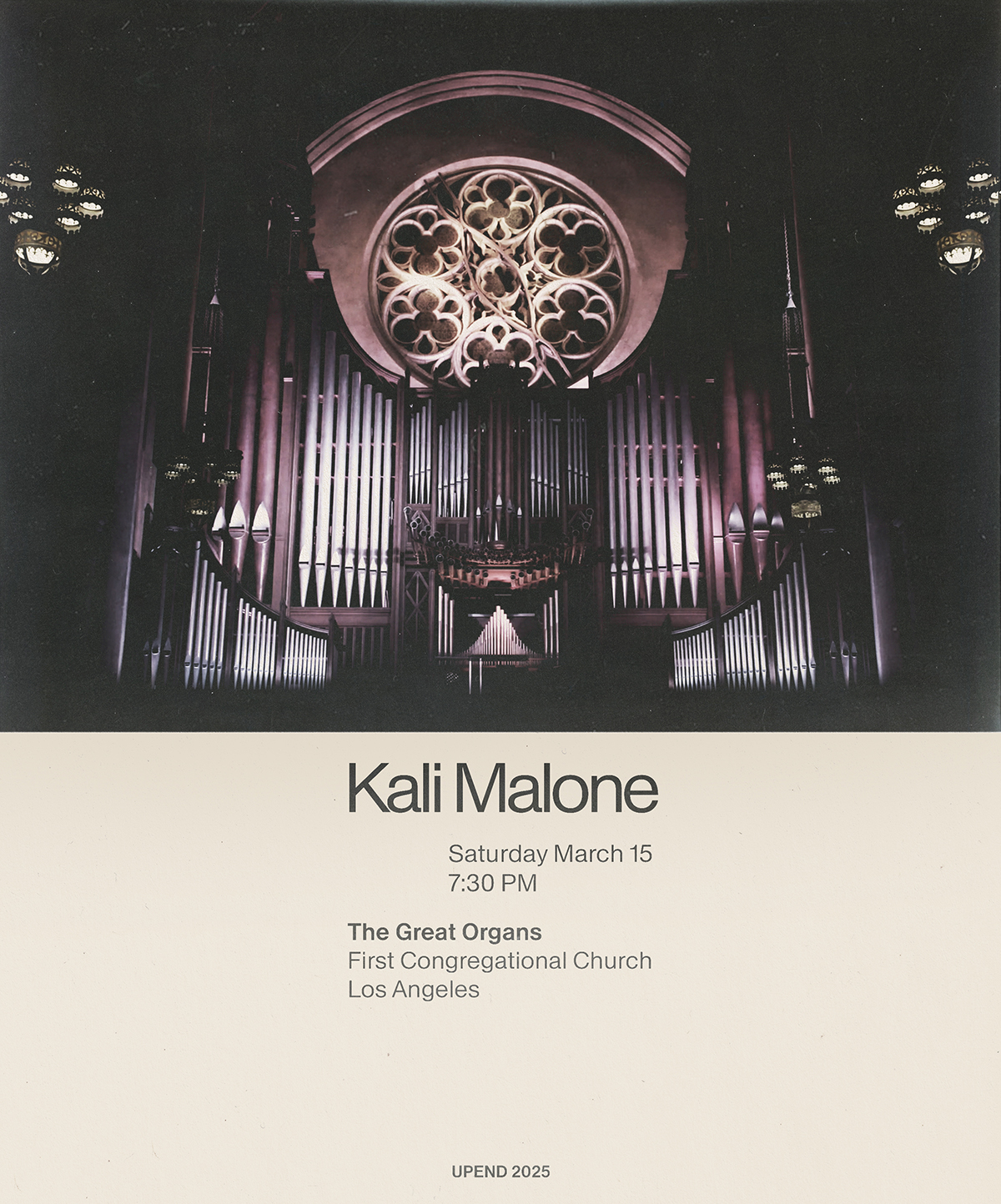
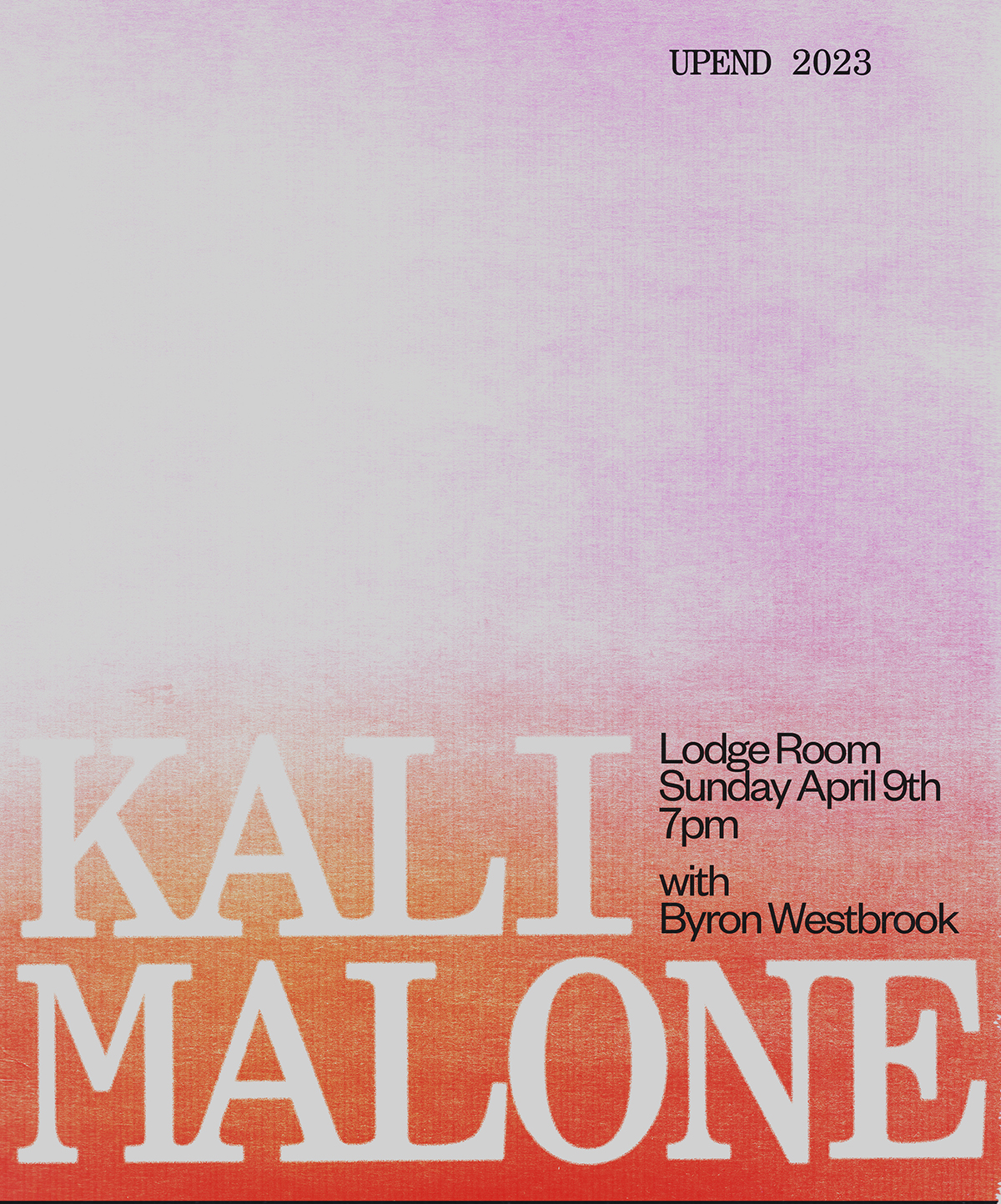
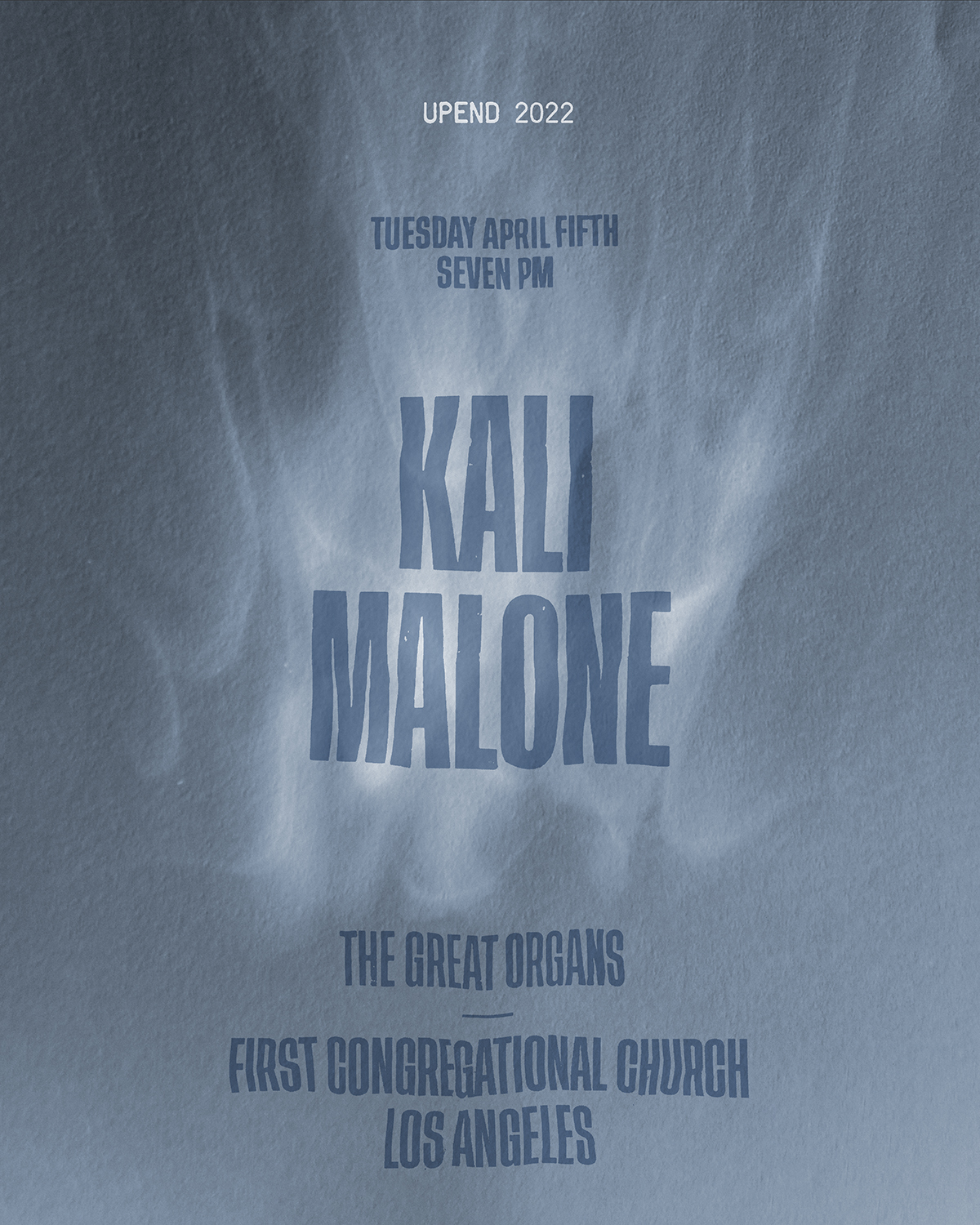
Next Spring, on Saturday April 10th, Kali Malone returns to The Great Organs at First Congregational Church in Los Angeles, one of the largest church organs in the world, to perform Burning Song, her forthcoming album on Ideologic Organ — a work composed for pipe organ, cello and guitar featuring Lucy Railton and Stephen O'Malley. The program also includes select compositions from Malone's vast organ discography.
Burning Song, Malone’s first new album of solo compositions since early 2024’s All Life Long, represents a transformation in her compositional strategy towards a process that is more intuitive and direct. The music moves through endings and beginnings, reflection and foresight, hovering in the moment just before understanding, where revelation lives. Feeling supersedes matrices, as each piece proceeds linearly, connected to one another by subtle bridging tones. She is joined by Lucy Railton on cello and Stephen O’Malley on bowed acoustic guitar, the same trio that honed a profound connection based on deep listening through the development of Malone’s work Does Spring Hide Its Joy.
“Kali Malone’s music reminds the listener that spectacle is felt in the chest. Its otherworldliness, represented by its scale, duration, and presentation, activates intimately held feelings of wonder and insight. Here is a space where sound can unlock a state of introspection and unwavering tenderness. Chord follows chord, each in slow succession, emerging like stones of various shades and shapes on a winding path. The trio moves as one, stepwise, through passages that are alternately ambiguous and radiant, at times triumphant as the tones rise towards the organ’s upper register. By discarding canon form, which has dominated much of her organ work, there is a clear sense of freedom that allows these pieces to unfold more gradually and speak more declaratively than ever before.”
PREVIOUS ACTIONS